
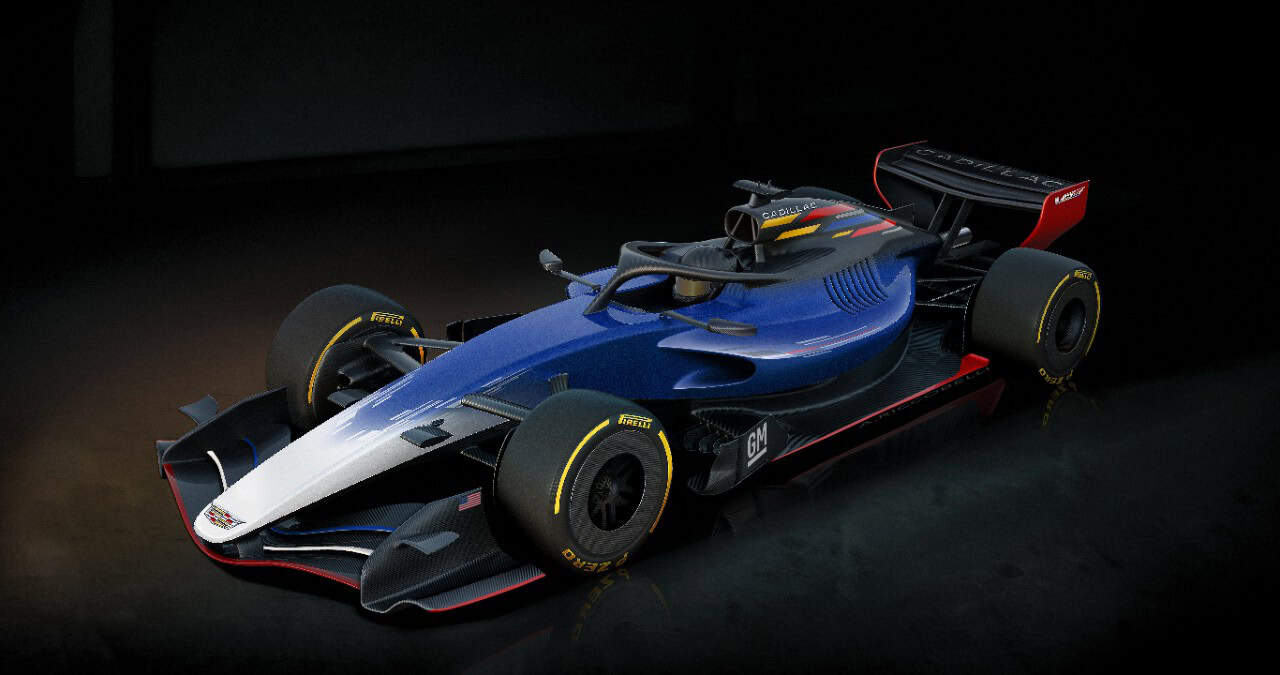
The Cadillac Formula 1 team, set to join the grid in 2026, will now operate under aerodynamic development restrictions as of January 1, 2025. This marks the end of a period of unrestricted testing, which Cadillac had previously enjoyed due to the delayed confirmation of its entry.
The Cadillac team’s path to Formula 1 has been far from straightforward.
Originally launched as Michael Andretti’s project, it has evolved into a fully Cadillac-branded outfit backed by General Motors (GM). With Andretti Global stepping aside, management now falls to TWG Global, led by Dan Towriss and supported by billionaire Mark Walter, co-owner of the Los Angeles Dodgers and Chelsea Football Club.
The UK-based operation, officially renamed Cadillac Formula Racing, has been assembling its team and working on a 2026 car design for several months. However, the lack of entry confirmation initially meant Cadillac was not subject to Formula 1’s regulatory restrictions, allowing unlimited wind tunnel and CFD testing during this period.
Aerodynamic Testing Restrictions
Now officially part of the sport starting next year, Cadillac’s aerodynamic testing allocation aligns with its status as an “equal-last” team for 2025.
Alongside Sauber, which finished last in the 2024 Constructors’ Championship, Cadillac will have 115% of the baseline aerodynamic testing allowance. This is 5% more than Williams and 15% more than Haas, key rivals Cadillac aims to compete with upon its debut.
Despite benefiting from unrestricted testing earlier, opposing teams are not overly concerned.
With the 2026 regulations still in flux, any early testing by Cadillac would have been based on provisional rules. Additionally, Cadillac’s relatively small team size—280 staff by late 2024—limited its ability to fully exploit the unlimited testing window.
Focused on 2026
Cadillac will adhere to the budget cap and testing restrictions moving forward, but it still retains a big advantage in being fully focused on the 2026 regulations. Rival teams will need to split their resources between their 2025 campaigns and early development for 2026, whereas Cadillac can dedicate its full attention and resources to the future.
Another boost comes from Cadillac’s partnership with Ferrari, which will supply customer engines, gearboxes, and rear suspension components. This arrangement allows Cadillac to allocate more resources to car development, without the burden of building these components in-house.
Looking further ahead, GM has announced plans to introduce its own F1 engine by the end of the decade, transitioning Cadillac from a customer to a full works team.
A Monumental Task
Despite these advantages, the scale of Cadillac’s challenge remains immense. One rival team boss described their effort as a “monumental task” emphasizing that even a small head start will even out quickly.
Success in 2026 will depend on Cadillac’s ability to scale up its team, refine its facilities, and effectively utilize its resources under the constraints of F1’s regulations.
Cadillac’s entry into Formula 1 signals a bold new chapter for the sport, and all eyes will be on how the team handles the transition from preparation to competition.


